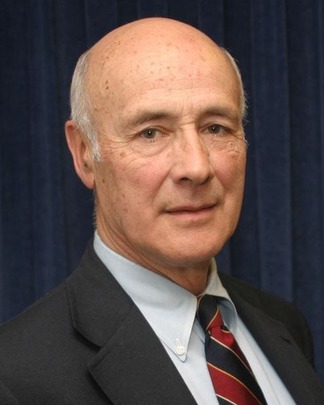
Joseph Nye
Joseph Nye was a University Distinguished Service Professor Emeritus and former Dean of the John F. Kennedy School of Government at Harvard University. A world-renowned political scientist, Nye is widely regarded as one of the most influential thinkers in international relations and U.S. foreign policy of the modern era. He is best known for developing the concepts of “soft power” and “smart power,” frameworks that explain how nations influence global affairs not only through military or economic force, but through values, culture, institutions, and diplomacy. Throughout his distinguished career, Nye played a central role in shaping American foreign policy. He served as Assistant Secretary of Defense for International Security Affairs, Chair of the National Intelligence Council, and Deputy Under Secretary of State, earning distinguished service awards from all three institutions. His scholarship bridges theory and practice, offering critical insights into global power dynamics, national security, international cooperation, and geopolitical strategy. Nye is the author of thirteen books and more than 150 articles published in leading academic, policy, and public outlets, making him one of the most cited voices in international relations.
Joseph Nye Professional Experience / Academic History
Professional Experience
-
University Distinguished Professor and Emeritus
-
Deputy Under Secretary for Security Assistance, Science and Technology
Academic History
-
Ph.D., Political Science
-
M.A., Philosophy, Politics and Economics
-
B.A., Public and International Affairs
EARLY CAREER & PUBLIC SERVICE
Over several decades, Joseph Nye held senior academic and public policy positions at Harvard University and leading international think tanks.
He served as a Distinguished Visiting Fellow at the Hoover Institution and was a fellow of the American Academy of Arts and Sciences, the British Academy, and the American Academy of Diplomacy.
From 1977 to 1979, Nye served as Deputy to the Under Secretary of State for Security Assistance, Science, and Technology, where he also chaired the National Security Council Group on Nuclear Nonproliferation.
In 1993 and 1994, he was Chair of the National Intelligence Council, which produced intelligence assessments for the President of the United States, and he received the Intelligence Community’s Distinguished Service Medal.
He later served as Assistant Secretary of Defense for International Security Affairs from 1994 to 1995, earning a second Distinguished Service Medal with an Oak Leaf Cluster.
RECOGNITION & INFLUENCE
Nye was consistently ranked as the most influential scholar in American foreign policy by surveys of international relations experts.
In 2011, Foreign Policy named him one of the world’s “Top 100 Global Thinkers,” and in 2014, he was awarded Japan’s Order of the Rising Sun for his contributions to international relations and diplomacy.
THOUGHT LEADERSHIP
Nye authored thirteen books, including seminal works on power, leadership, and global strategy, and wrote more than 150 articles in professional and policy journals.
His writing extended beyond academia to global audiences through policy essays and an internationally syndicated newspaper column published in more than 70 countries.
His work shaped global debates on geopolitics, globalization, national security, and the evolving nature of power in a multipolar world.