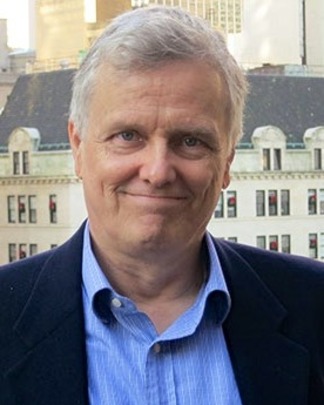
Philip Tetlock
Philip Tetlock is the Leonore Annenberg University Professor at the University of Pennsylvania, holding joint appointments in the Department of Psychology and The Wharton School of Business. His research sits at the intersection of behavioral psychology, decision science, and forecasting, with a particular focus on probabilistic thinking, accountability in judgment, and the cognitive traits that separate accurate forecasters from overconfident experts. Tetlock is the Co-Founder of the Good Judgment Project, a landmark research initiative that explores how structured methods and crowd-based intelligence can dramatically improve the accuracy of forecasts related to geopolitical, economic, and social events. He is internationally recognized for his empirical research on the limits of expert judgment, challenging long-held assumptions about the predictive power of traditional experts. His work rigorously examines how bias, overconfidence, and flawed reasoning undermine forecasting accuracy, and how disciplined techniques can measurably improve judgment. Tetlock is the co-author of the bestselling and award-winning book Superforecasting, which distills decades of research into practical frameworks for improving prediction and decision-making under uncertainty.
Philip Tetlock Professional Experience / Academic History
Professional Experience
-
Annenberg University Professor
-
Mitchell Endowed Professorship
-
Harold Burtt Professor of Psychology and Political Science
Academic History
-
Ph.D., Psychology
-
Bachelor of Arts

RESEARCH EXPERTISE & ACADEMIC CONTRIBUTIONS
Philip Tetlock’s research spans decades of influential work on judgment, decision-making, and forecasting under uncertainty, with a particular emphasis on how to define, measure, and improve “good judgment” in both controlled laboratory settings and complex real-world environments.
His work bridges social, organizational, and political psychology, addressing high-impact topics such as accountability systems, value conflicts, counterfactual reasoning, taboo trade-offs, and cognitive bias.
A significant focus of his recent research centers on forecasting tournaments—structured, competitive forecasting environments shown to improve predictive accuracy.
This work has demonstrated how well-designed forecasting systems can enhance intelligence analysis, policy evaluation, and investment decision-making, while also helping to reduce unnecessary polarization in public and national security debates.
Tetlock’s contributions have been recognized by leading scientific institutions, including the American Psychological Association, American Political Science Association, American Academy of Arts and Sciences, National Academy of Sciences, and the American Association for the Advancement of Science.
He is also the author of several influential books at the intersection of psychology, political science, and organizational behavior, further cementing his role as a leading authority on judgment, forecasting, and decision science.
RECENT AWARDS & HONORS
2019 Fellow, American Philosophical Society
2017 Thomas Schelling Award, Kennedy School of Government, Harvard University
2016 Fellow, American Academy of Political and Social Science
2015 Andrew Carnegie Fellow
2008 Harold Lasswell Award for Distinguished Scientific Contribution in the Field of Political Psychology,
2007 Grawemeyer World Order Prize
2006 Robert E. Lane Award for best book in political psychology, American Political Science Association