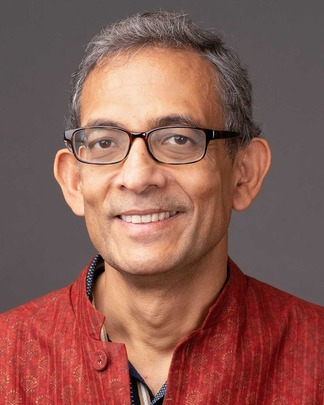
Abhijit Vinayak Banerjee
Abhijit Vinayak Banerjee is a Nobel Prize–winning economist and the Ford Foundation International Professor of Economics at the Massachusetts Institute of Technology. He is also a Founding Director of the Abdul Latif Jameel Poverty Action Lab (J-PAL), one of the world’s most influential research organizations dedicated to reducing global poverty through evidence-based policy. Widely regarded as one of the most important economists of his generation, Banerjee is a leading authority on global poverty, economic development, behavioral economics, and public policy design. He has served as an adviser to major global organizations including the World Bank, the United Nations, the Government of India, and numerous international NGOs, offering expertise on poverty interventions, policy reform, and economic strategy. He is the author of an extensive body of academic research and six influential books, most notably Poor Economics, which won the Goldman Sachs Business Book of the Year Award and has become a foundational text in development economics. In 2019, Banerjee was awarded the Nobel Prize in Economic Sciences alongside Esther Duflo and Michael Kremer for their groundbreaking experimental approach to alleviating global poverty.
Abhijit Vinayak Banerjee Professional Experience / Academic History
Professional Experience
-
Ford Foundation International Professor of Economics
Academic History
-
Ph.D., Economics
-
M.A., Economics
-
B.Sc., Economics


CURRENT AFFILIATIONS
Founding Partner, J-PAL
Trustee, Save the Children USA
Chair, Global Education Evidence Advisory Panel
Global Advisory Board, Covid-19 Response
RESEARCH EXPERTISE
Abhijit Banerjee gained global recognition for pioneering the use of Randomized Controlled Trials (RCTs) in economics, a transformative approach that brought scientific rigor to the evaluation of social policies.
His early work—sometimes met with controversy for borrowing methods from biological sciences—helped establish RCTs as the gold standard for assessing the effectiveness of interventions in health, education, financial inclusion, employment, and other development sectors.
This evidence-first methodology, widely adopted by the community of researchers known as “randomistas,” has fundamentally reshaped how governments, NGOs, and international institutions design and implement poverty-reduction programs.
Banerjee’s research continues to redefine global development by emphasizing data-driven policymaking and scalable, measurable solutions.
EARLY CAREER & RECOGNITIONS
Banerjee’s contributions have earned him numerous prestigious honors, including the inaugural Infosys Prize in Social Sciences, a Guggenheim Fellowship, and an Alfred P. Sloan Research Fellowship.
He has been named one of Foreign Policy’s Top 100 Global Thinkers and holds fellowships or research affiliations with leading institutions such as the National Bureau of Economic Research (NBER), the Centre for Economic Policy Research (CEPR), the Kiel Institute, the American Academy of Arts and Sciences, and the Econometric Society.
He is also a co-recipient of the 2019 Nobel Prize in Economic Sciences, honored alongside Esther Duflo and Michael Kremer for advancing experimental approaches in development economics.
Banerjee has served on the UN Secretary-General’s High-Level Panel of Eminent Persons on the Post-2015 Development Agenda, contributing to global policy frameworks.
His published research—featured in the world’s top economics journals—has become foundational to modern theories of financial markets, economic development, and growth.