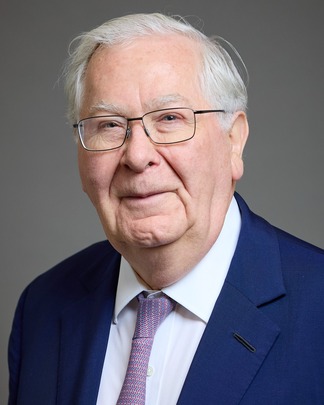
Mervyn King
Mervyn King, known as Lord King of Lothbury, is one of the world’s most respected and influential figures in central banking and economic policy. He is best known for serving as Governor of the Bank of England, where he led the institution through the global financial crisis of 2008, one of the most severe economic disruptions in modern history. Alongside other leading central bankers, King played a pivotal role in stabilizing the global banking system and helping avert a second Great Depression. During his tenure, he helped entrench inflation targeting as the cornerstone of UK monetary policy, a framework that later became widely adopted by central banks around the world. King is also a highly regarded economist, author, and academic. He is the author of The End of Alchemy, a critical examination of the structural fragility of modern financial systems, and Radical Uncertainty, which challenges conventional economic forecasting and decision-making models. Earlier in his career, King taught economics at Cambridge University and the University of Birmingham, and later served as a Visiting Professor at Harvard University and MIT. Today, he is the Alan Greenspan Professor of Economics and Professor of Law at New York University, and an Emeritus Professor of Economics at the London School of Economics.
Mervyn King Professional Experience / Academic History
Professional Experience
-
Emeritus Professor of Economics
-
Alan Greenspan Professor of Economics and Professor of Law
-
Governor and Chairman of the Monetary Policy Committee
Academic History
-
B.A., Economics, First Class Honours


Lord Mervyn King served as Governor of the Bank of England, Chairman of its Monetary Policy Committee, and Chairman of the group of major central banks at the Bank for International Settlements.
During his tenure, he introduced inflation targeting as the cornerstone of UK monetary policy, helping to establish it as a global standard among central banks.
King played a central role during the 2008 financial crisis, guiding the UK through one of its most challenging economic periods.
His leadership focused on maintaining monetary independence while implementing far-reaching reforms, strengthening regulation, and enhancing financial oversight.
Before becoming Governor, he served as Deputy Governor (1998–2003), Chief Economist and Executive Director (1991–1998), and Non-Executive Director of the Bank (1990–1991).
EXPERTISE & THOUGHT LEADERSHIP
Lord King is widely recognized as one of the most influential central bankers of his generation, with deep expertise in monetary policy, financial stability, and modern banking structures.
He is a Fellow of the British Academy, an Honorary Fellow of King’s and St John’s Colleges, Cambridge, and holds Honorary Degrees from Cambridge, Birmingham, City of London, Edinburgh, LSE, Wolverhampton, Worcester, and Helsinki Universities.
He also serves as Chair of the Philharmonia Orchestra and is a member of the House of Lords Economic Affairs Committee.
King is frequently cited in discussions of financial crises, systemic risk, inflation, and central bank policy.
HONORS & RECOGNITIONS
In July 2013, Lord King was appointed a life peer in the British House of Lords by Queen Elizabeth II for his contributions to public service, taking the title Baron King of Lothbury, referencing the street adjacent to the Bank of England.
Later that year, he was appointed Distinguished Visiting Professor of Business and Law at New York University and Distinguished Visiting Fellow at the Council on Foreign Relations.